Allen's Slab Foundation Repair Specialists
Stabilize the slab under your home
Request a free slab repair estimate before movement spreads into brick, tile, doors, and resale paperwork.
Allen's Slab Foundation Repair Specialists
Request a free slab repair estimate before movement spreads into brick, tile, doors, and resale paperwork.
Most Allen homes sit on slab foundations, and many built during the city's major growth years use post-tension concrete. Those slabs depend on consistent support from the soil below. When clay shrinks away from the edges or swells unevenly after rain, parts of the slab can lose support and crack under stress.
Slab foundation repair may involve underpinning low areas with piers, correcting drainage, filling voids where appropriate, sealing cracks, and carefully lifting sections back toward a stable elevation. The correct method depends on measured movement, soil conditions, slab type, and whether the damage is active or historic.
Post-tension slabs need special caution. Contractors should account for cable locations and avoid repair methods that require unnecessary cutting or drilling. If plumbing work is involved, slab access must be planned so structural cables are not damaged.
A good Allen slab repair estimate explains where movement is happening, why that location is vulnerable, what supports will be installed, and how the repair will be warranted. The best repair plan also addresses moisture control so the slab is not stabilized on one side while water keeps attacking the other.
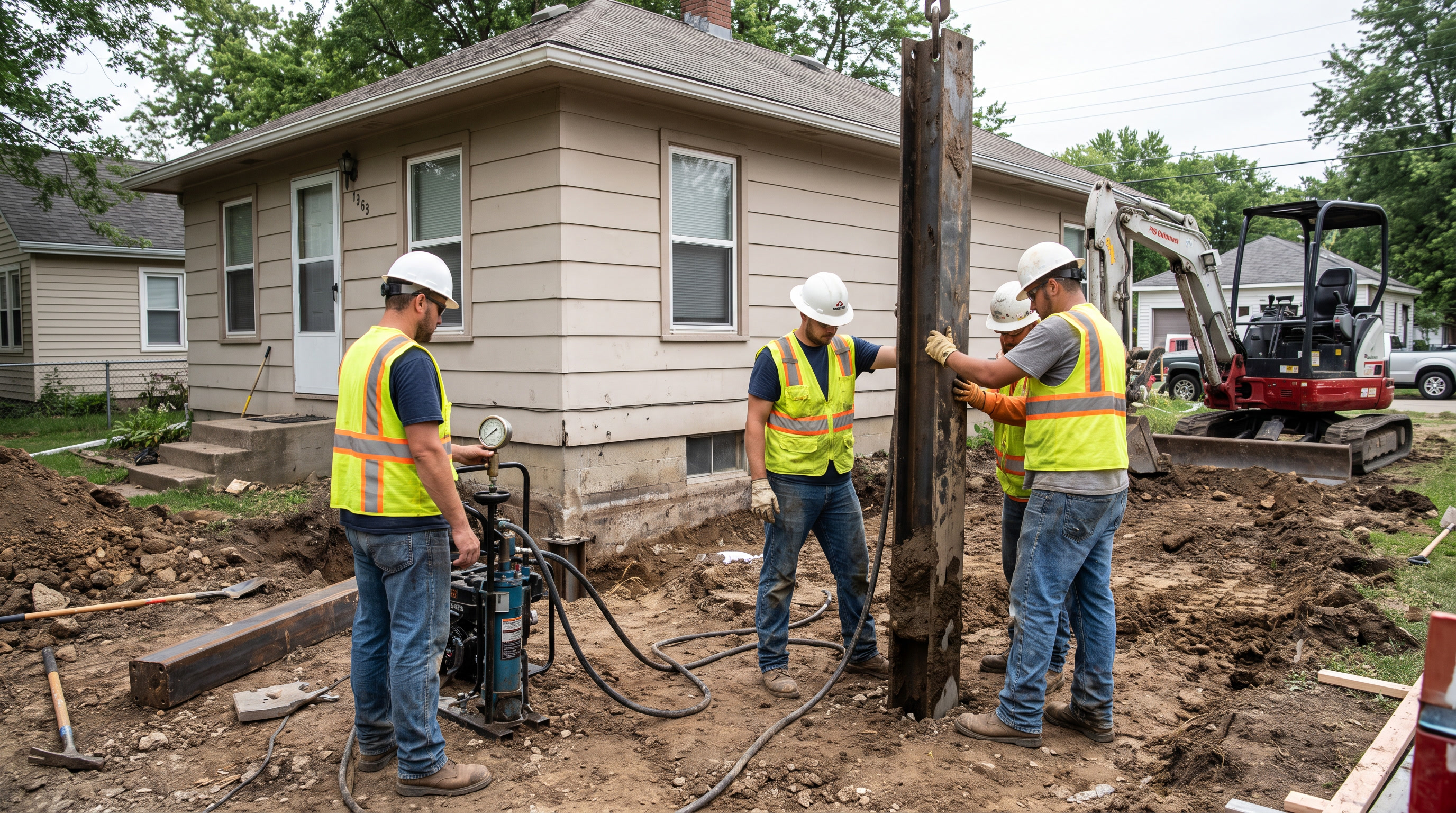
Slab repair combines structural stabilization with site corrections that reduce future movement.
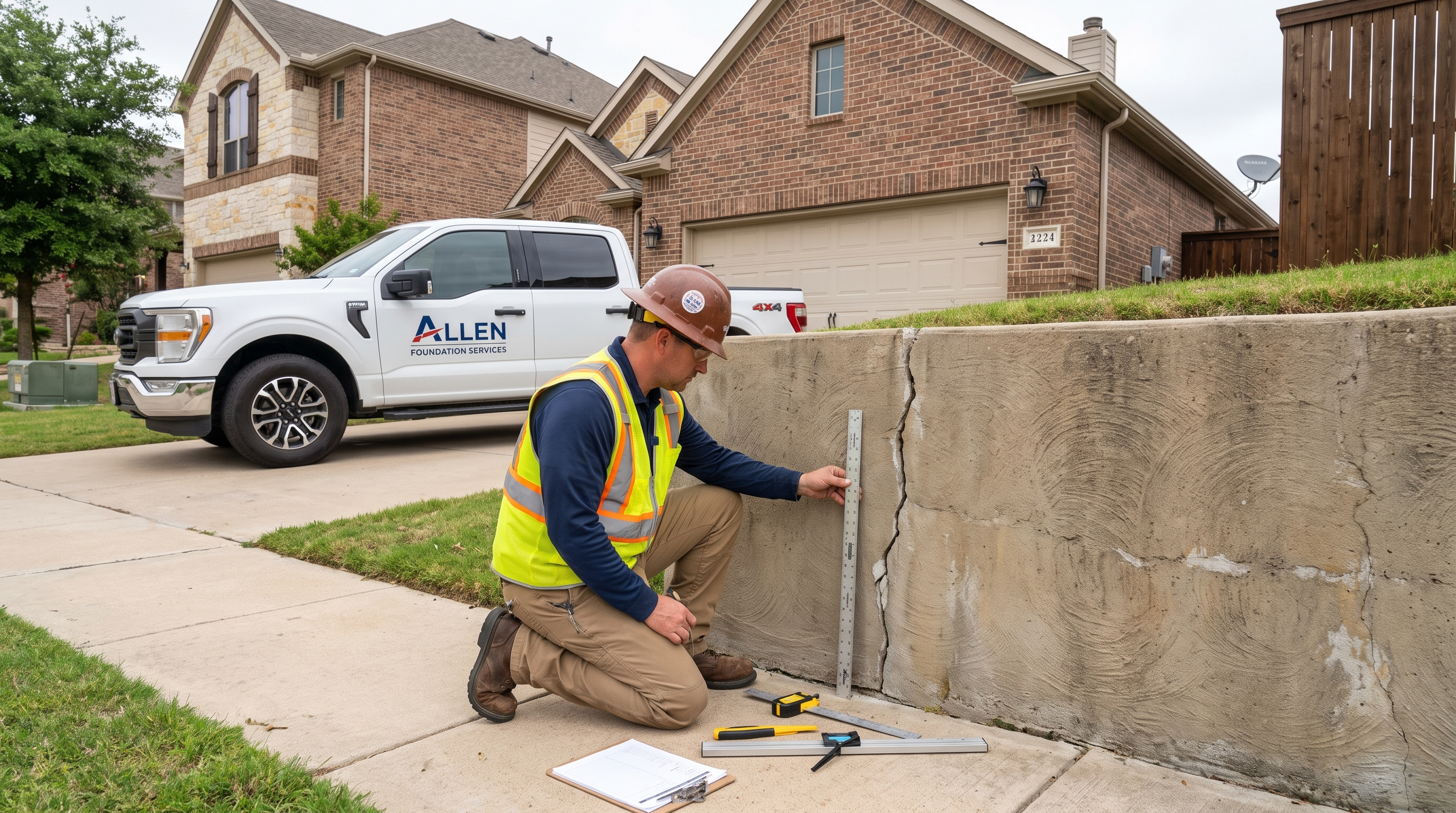
Elevation readings, crack patterns, and exterior symptoms are reviewed to determine where the slab has dropped, lifted, or twisted. This keeps the repair focused on actual movement rather than every visible blemish.
Depending on the diagnosis, contractors may recommend steel piers, helical piers, limited lifting, crack repair, or other structural support. The goal is to transfer load to competent bearing material below the active clay zone.
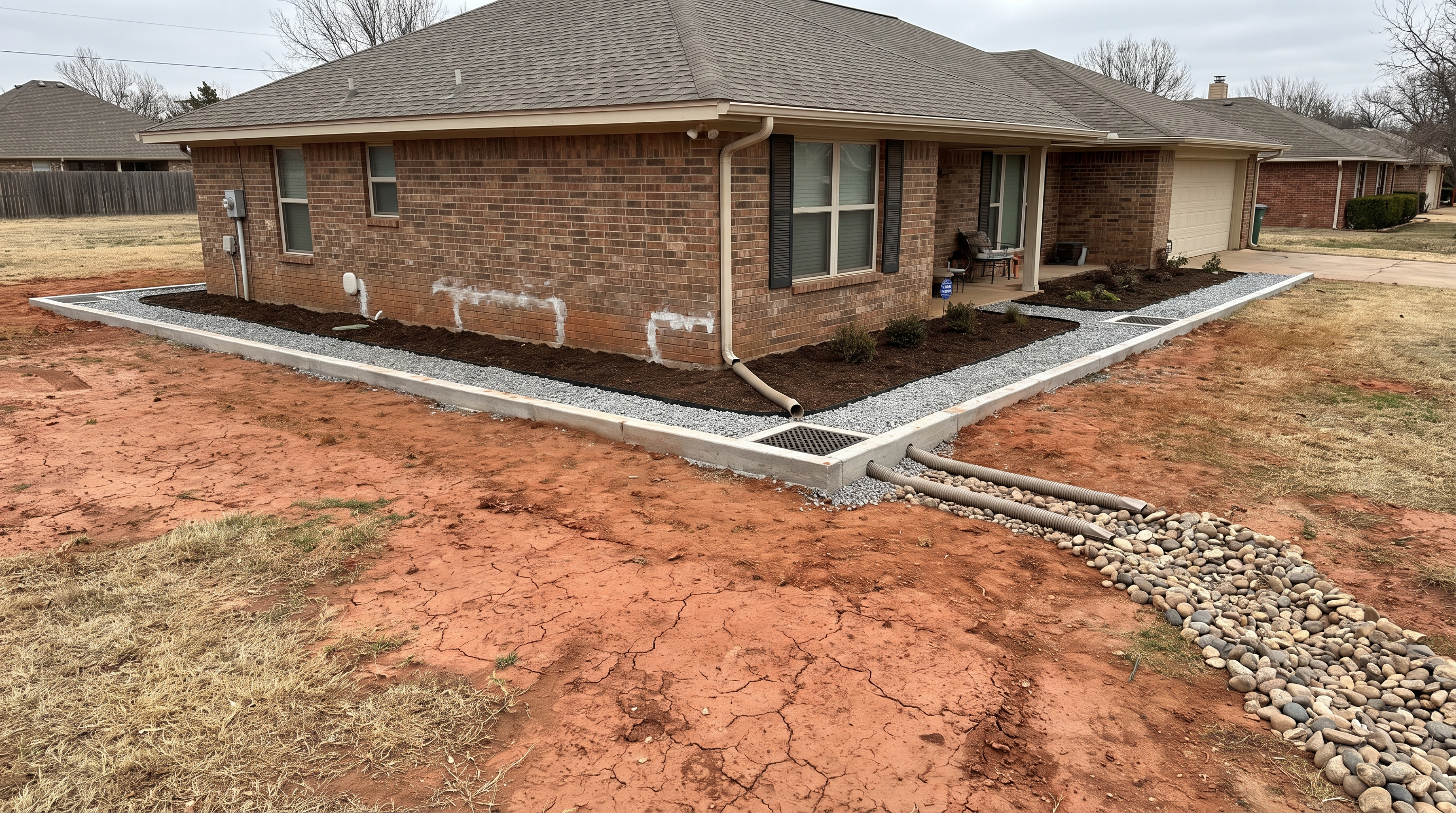
Slab repair often needs grading, downspout extensions, surface drains, or irrigation adjustments. Without moisture control, North Texas clay can keep cycling and stress the repaired area.
Allen slab repairs must account for embedded cables and concrete behavior. The contractor match prioritizes repair planning that avoids careless slab cutting and unnecessary disturbance.
Piers solve support problems, but they do not fix pooling water or dry soil pullback. A complete slab repair estimate should address both the structure and the soil conditions creating movement.
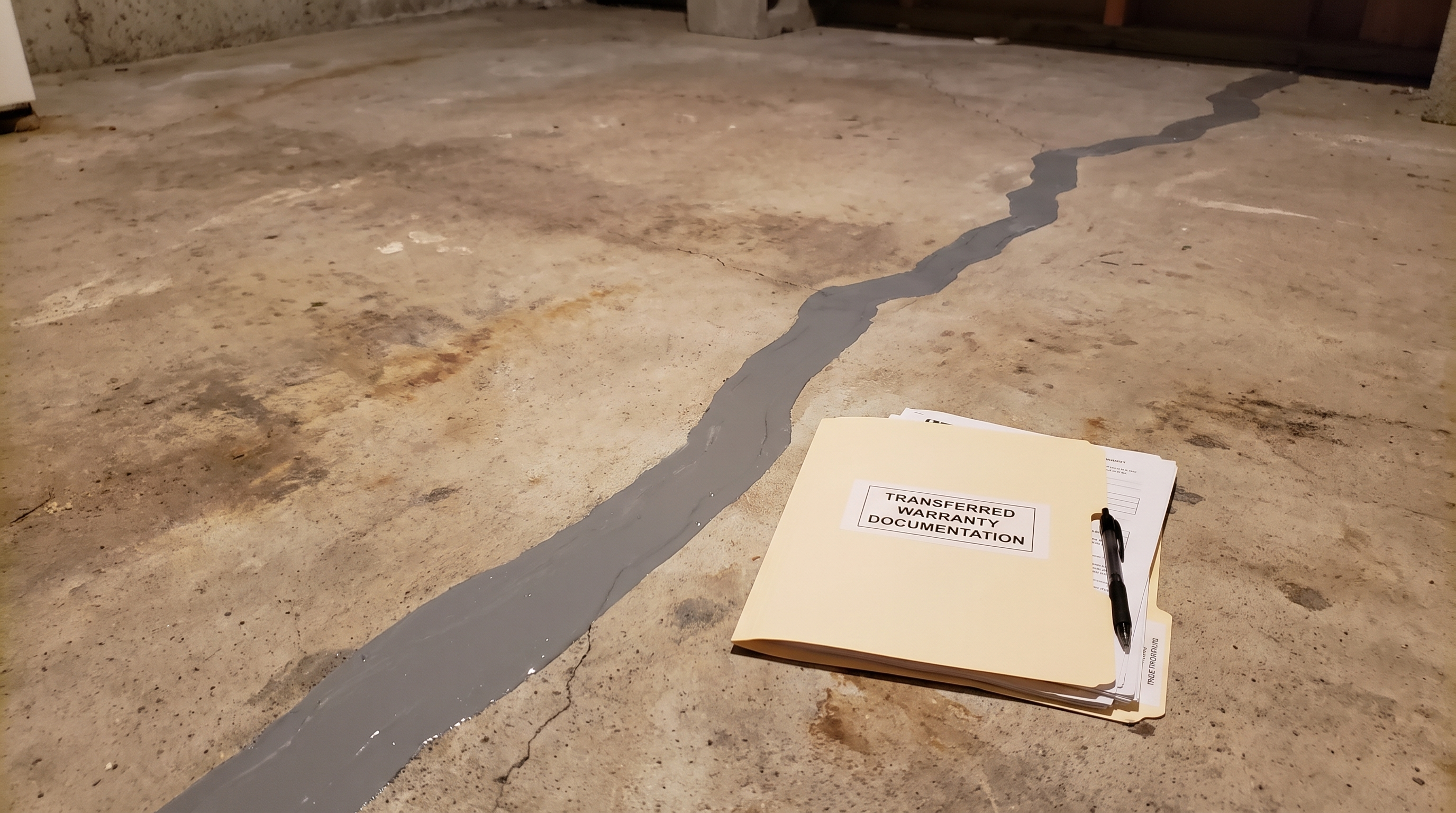
Ask for a slab repair estimate with measurements, method, and warranty terms in writing.
Free — no obligations
The contractor documents symptoms, slab type, crack patterns, drainage conditions, and elevation differences.
A written plan identifies support locations, repair method, access points, and any drainage changes needed around the slab.
Piers, lifting, crack repair, or related stabilization work is completed according to the approved scope.
The homeowner receives repair records, warranty information, and maintenance guidance for soil moisture and drainage.